Coverage before catalog
We frame system choices around audience shape, source distance, and the program material before moving toward a product family.

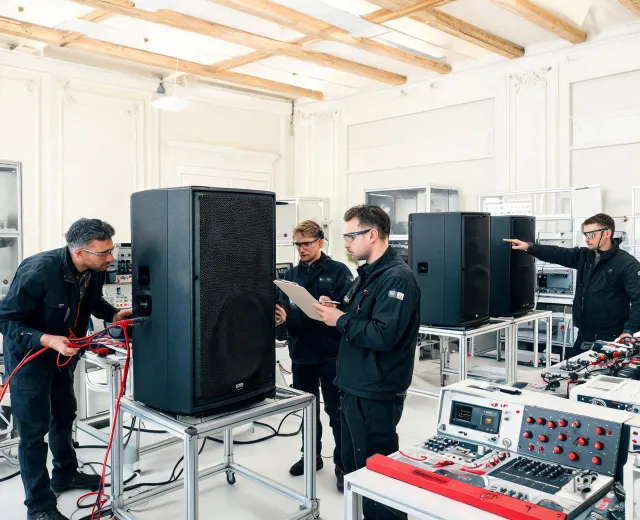
RCF works as a dependable partner for professional loudspeaker projects, with a focus on product families that serve venues, rental operations, production companies, education spaces, and integrators. The brand story is not only about boxes and specifications. It is about the everyday trust required when sound must reach the back row without surprising the crew.
That trust begins with a practical design attitude. A system should be powerful, but it should also be understandable. It should give engineers room to tune, installers access to service, and owners confidence that their chosen path fits the events they actually host.
Professional audio brands earn loyalty in small moments: the first speech check that lands clearly, the second night of a tour that sets up faster, the worship service where the pastor can be heard without harshness, and the conference room where a visiting presenter does not fight the sound system. RCF keeps those moments at the center.
The way RCF approaches a brand is therefore grounded in stewardship. Each project asks the same questions in a different room: who must hear, how loud, for how long, under what constraints, and who will maintain the system after the commissioning team leaves. Answering those questions well is what makes a product catalog useful.
RCF systems are described with a direct, reliable voice because buyers in this market do not need theatrical claims. They need an experienced path through loudspeaker roles, subwoofer behavior, rigging, monitoring, and support documentation.
Good sound is not an accident at showtime. It is the result of disciplined choices made before the first cable is pulled.
We frame system choices around audience shape, source distance, and the program material before moving toward a product family.
Mounting, cabling, service access, and commissioning notes are treated as project realities, not details to solve after purchase.
A room succeeds when staff can start, monitor, and explain the system without needing a designer present every day.
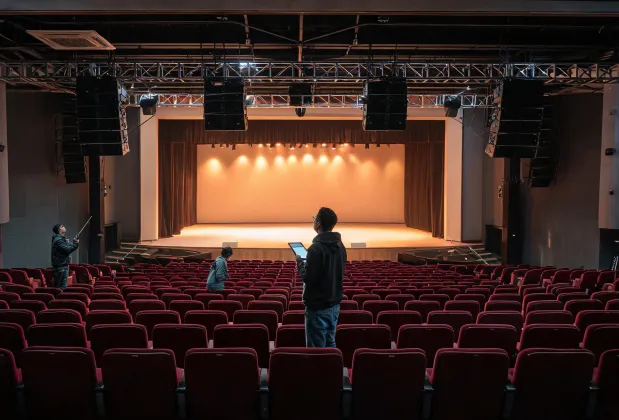
Many RCF opportunities happen in venues that serve more than one kind of audience. A school auditorium may host lectures, musicals, graduations, and weekend rentals. A house of worship may need spoken word clarity, music reinforcement, streaming support, and volunteer-friendly operation. A civic hall may move between meetings, cinema nights, and concerts.
Reliable loudspeaker planning gives those spaces room to grow. The goal is not a louder system for its own sake. The goal is predictable coverage, clean low-frequency decisions, intelligible speech, and a support trail that lets the room keep serving people after installation day.
That stance also means being honest about boundaries. A single portable box has a fixed coverage angle and a rated SPL ceiling, sustained programs heat transducers and reduce sensitivity until headroom is planned for, and any system that moves between venues carries cable wear, preset drift, and weather exposure that documentation has to anticipate. RCF content here treats those limits as part of a dependable answer, not fine print.
Tell us how the room is used, who operates it, and what has been difficult with previous systems. Those details help turn product interest into a better project path.