
Application continuity

RCF Applications for consistent venue performance

Compare a venue audio system chosen only from a product list against one matched to coverage, room behavior, operator skill, and service expectations. The difference shows up in intelligibility, level consistency, and how quickly a crew can run a show — which is exactly what RCF application planning sets out to get right.

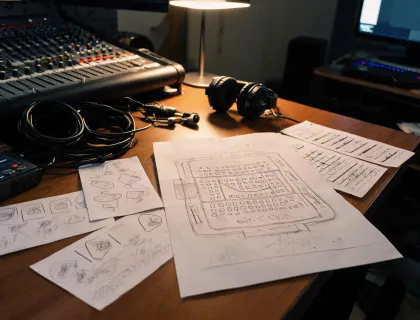
Untuned venue audio system planning before RCF review
Before: scattered assumptions
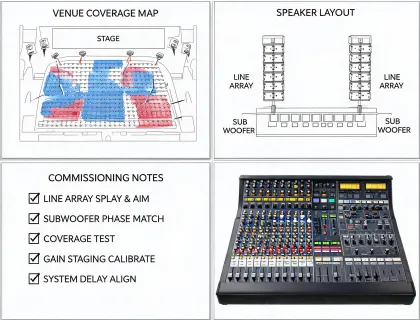
Completed venue application plan after RCF review
After: application-ready path
Before you quote

Estimate the system conversation before quoting

The calculator-style layout is used here as a project readiness demo. It helps buyers organize facts that change the loudspeaker recommendation: audience width, depth, ceiling or trim height, low-frequency expectations, stage volume, and whether the room needs permanent, portable, or hybrid operation.

For a small corporate room, the right path may prioritize speech coverage and simple control. For a worship auditorium, the same budget discussion may shift toward musical headroom, stage monitoring, subwoofer control, and volunteer documentation. For touring, the weight, truck pack, and setup sequence may matter as much as SPL.

Audience depth18-45 m
Program intensitySpeech + live music
Deployment styleInstall / portable hybrid

Result: compare line array coverage with distributed fill and matched subwoofer options before locking the equipment list.

Fit in practice

Three examples of fit-driven planning

Auditorium modernization

Background: a roughly 600-seat municipal hall, 22 m deep, lost intelligibility at the rear and under the balcony, and its old central cluster blocked sightlines. Process: the review replaced it with a flown left-right line array, modest cardioid subwoofer support to keep low end off the stage, and short-throw fill cabinets for the balcony front and side seats, then documented presets and start-up steps for volunteer operators. Result: coverage reached the back rows and underbalcony zone that the previous cluster missed, the sight-line obstruction was removed, and weekly staff could power up the room from a single labeled preset without an engineer on site.

Portable rental package

A production company needed a scalable set that could serve corporate events and weekend music programs. The review focused on PA speakers, subwoofers, stage monitors, transport cases, labeling, and repeatable deployment drawings.

Hybrid worship campus

A worship team needed coverage in the main room, overflow areas, and occasional outdoor services. The planning conversation separated permanent loudspeaker placement from portable support pieces that could move between programs.

Realistic boundaries

What an application plan should admit up front

RCF covers a wide span, from flown touring arrays to portable powered PA, and that breadth is useful only when each application is matched to what the hardware can actually sustain. These limits are stated before a quote, not after a complaint.

Output and coverage are finite

A portable PA box has a rated maximum SPL and a fixed dispersion pattern. Asking one cabinet to cover a deep or wide room past that pattern adds edge distortion, not reach. When audience depth grows, the answer is array geometry or added boxes, and the budget conversation has to follow.

Sustained level meets thermal limits

Long programs at high level heat the voice coils, sensitivity drops with heat, and the amplifier works harder to hold the same loudness. A short bench figure is not a promise for a four-hour event, so RCF planning sizes headroom for the real program length rather than the spec-sheet peak.

Portability has a service cost

Cases that move between corporate days and weekend music will see vibration, cable wear, connector fatigue, and preset drift across operators. A portable-and-install hybrid trades single-room optimization for flexibility, so labeling, spares, and handoff notes become part of keeping the application dependable.

Application match

Request an RCF application readiness review

Share the room, event types, deployment style, and current system concerns. We will help sort the loudspeaker families and support notes that fit the application.